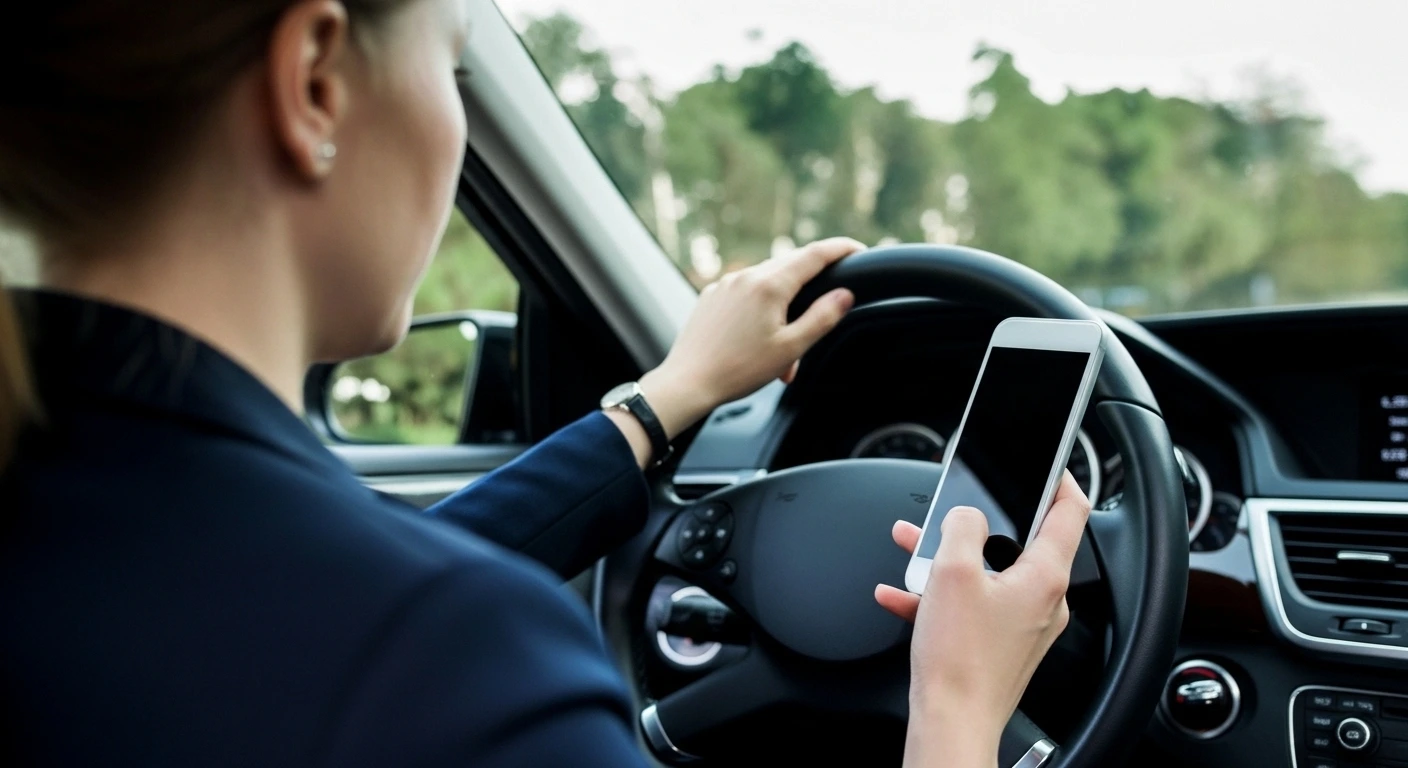
Louisiana drivers face fines ranging from one hundred dollars to five hundred dollars under the state hands-free driving law commonly called the touch law. This regulation under Louisiana Revised Statute 32 section 59 prohibits holding or touching wireless telecommunications devices while operating motor vehicles on public roads. Understanding these penalties helps drivers avoid costly citations and contributes to safer roadways across communities from New Orleans to Shreveport. At Lawwalls, we explain the complete fine structure, exceptions, enforcement timeline, and practical compliance strategies every Louisiana motorist needs to know before the full enforcement period begins.


Lawwalls
Get realtime updates and indepth insights? Follow our WhatsApp channel to receive instant notifications and stay informed.
FollowWhat Is Louisiana Touch Law and Why Drivers Call It That
Louisiana drivers commonly refer to the hands-free driving regulation as the touch law because it prohibits physically touching wireless telecommunications devices while operating vehicles. The informal name captures the essence of Louisiana Revised Statute 32 section 59 which makes holding phones illegal during vehicle operation. This terminology spread quickly through communities across Baton Rouge, Lafayette, and Lake Charles as drivers discussed the new restrictions. The law represents one of the strictest distracted driving regulations in the southeastern United States by eliminating nearly all handheld phone interactions while driving.
The legislation addresses the growing concern about distracted driving accidents that claimed one hundred seventy-eight lives in Louisiana according to the Louisiana Highway Safety Commission. These preventable fatalities motivated lawmakers to pass House Bill 519 creating comprehensive restrictions on wireless device use. Governor Landry signed the legislation recognizing that distracted driving contributed to twenty-two percent of traffic fatalities statewide. The touch law aims to reduce these tragic statistics by requiring drivers to use hands-free technology exclusively while vehicles remain in motion on public roads and highways.
Louisiana Touch Law Timeline and When Enforcement Actually Begins
The touch law officially took effect on August first creating the legal framework for hands-free driving requirements throughout Louisiana. However, enforcement follows a deliberate phase-in approach designed to educate drivers before imposing financial penalties for violations. Law enforcement officers from the Louisiana State Police and local agencies issue only written warnings during the initial grace period. This educational approach gives drivers time to purchase mounting equipment, configure Bluetooth connections, and adjust driving habits before facing fines.
Full enforcement with monetary penalties begins on January first marking the transition from warnings to citations with fines. Drivers caught holding phones after this date face the complete fine structure ranging from one hundred to five hundred dollars depending on circumstances. The grace period reflects legislative recognition that drivers need time to adapt to new restrictions and acquire compliant technology. Traffic stops during the warning period still appear on police records but carry no financial consequences, insurance impacts, or points on driving records for Louisiana motorists.
Louisiana Touch Law Fine Amounts and Penalty Structure Explained
The Louisiana touch law fine structure varies significantly based on violation location and whether accidents occur during the infraction. Standard violations on regular roadways carry a one hundred dollar fine for first and subsequent offenses under Louisiana Revised Statute 32 section 59. Judges may reduce this penalty to fifty dollars if offenders complete fifteen hours of community service with half dedicated to litter abatement programs. This alternative provides financial relief while contributing positive service to Louisiana communities from New Orleans to Lake Charles.
Violations occurring in school zones or highway construction zones carry substantially higher penalties reflecting increased danger to vulnerable populations. These enhanced enforcement areas impose two hundred fifty dollar fines for standard violations or one hundred dollars plus community service requirements. The dramatically increased penalties emphasize protecting children near educational facilities and construction workers maintaining Louisiana infrastructure. Accidents occurring while violating the touch law double all fine amounts, reaching two hundred dollars for standard locations or five hundred dollars in school and construction zones.
What the Louisiana Touch Law Prohibits While Driving Vehicles
Louisiana Revised Statute 32 section 59 prohibits holding wireless telecommunications devices for any purpose while operating motor vehicles on public roads. The restrictions extend beyond texting to include making or receiving phone calls, entering telephone numbers, accessing social media platforms, viewing videos or photographs, and browsing internet applications. These comprehensive prohibitions eliminate virtually all handheld phone interactions during vehicle operation. The law recognizes that any manual device interaction creates dangerous cognitive and visual distractions regardless of the specific activity involved.
The legislation specifically targets behaviors that remove drivers’ hands from steering controls and eyes from roadway monitoring. Writing, sending, or reading text-based communications including emails, instant messages, and standard text messages all constitute violations under the touch law. Accessing social media platforms, posting content, viewing videos, or browsing applications while holding devices creates citation risks for Louisiana drivers. Voice commands initiated through hands-free systems remain legal, but manually selecting songs, adjusting volume, or scrolling through playlists while holding phones violates the statute throughout Louisiana parishes.
Understanding Lawfully Stationary and the Red Light Confusion
The lawfully stationary exception generates significant confusion among Louisiana drivers wondering whether they can check phones at red lights and stop signs. Louisiana Revised Statute 32 section 59 permits handheld device use when vehicles are lawfully stationary, meaning stopped in park or neutral, or standing in gear without moving. This includes stops for traffic signals, avoiding other vehicles, or obeying law enforcement directions in travel lanes or on road shoulders. However, the critical distinction involves whether your vehicle is actively moving or completely stopped in a stationary position.
Drivers stopped at red lights can legally check phones only if their vehicles remain completely motionless and they return attention to driving before movement begins. The moment the light changes green and your vehicle begins rolling forward, continued phone handling becomes a violation regardless of low speed. This creates practical challenges at intersections across Baton Rouge and Shreveport where quick light changes demand immediate attention. The safest approach involves avoiding phone interactions at all traffic stops to prevent inadvertent violations when vehicles begin moving again.
Many Louisiana drivers mistakenly believe stopped in traffic always qualifies as lawfully stationary regardless of vehicle movement. Traffic court judges interpret this provision strictly, finding violations when drivers hold phones while creeping forward in congestion or slowly accelerating from stops. The DOTD recommends treating any vehicle movement as active driving requiring hands-free compliance. Emergency situations like reporting accidents, road hazards, crimes, or medical emergencies provide additional exceptions regardless of whether vehicles are moving or stationary on Louisiana roadways.
Hands-Free Exceptions to Louisiana Touch Law Requirements
Louisiana Revised Statute 32 section 59 permits several hands-free technology options allowing drivers to maintain communication while keeping hands on steering wheels. Drivers may use wireless devices paired through vehicle Bluetooth systems enabling calls through dashboard speakers and microphones. Voice-activated assistants like Siri, Google Assistant, and Alexa allow phone operation without physical contact when properly configured. These technologies preserve communication capabilities while eliminating the visual and manual distractions that cause accidents across Lafayette and Lake Charles communities.
Dashboard-mounted phones and permanently affixed devices provide legal alternatives for navigation and communication needs during vehicle operation. The statute specifically allows hands-free GPS systems mounted on windshields or dashboards for navigation purposes throughout Louisiana. However, drivers cannot hold phones to view navigation even when audio directions play through speakers, requiring proper mounting solutions. Rideshare drivers for companies like Uber and Lyft, along with delivery drivers for DoorDash and similar services, may use permanently affixed devices for dispatch communications under commercial driver exceptions.
Law enforcement officers, firefighters, and emergency medical services personnel remain exempt from touch law restrictions while performing official duties responding to emergencies. Citizens band radios used by truckers and recreational enthusiasts fall outside wireless telecommunications device definitions under the statute. Wrist-worn devices like Apple Watch and Galaxy Watch technically qualify as hands-free when accepting calls through taps, though excessive manual interaction may still create distraction concerns. Autonomous vehicles operating in high or full automation mode without human supervision also receive exemptions recognizing passengers rather than active drivers occupy these vehicles.
Primary Versus Secondary Offense and When Police Can Stop You
The Louisiana touch law operates as a secondary offense throughout most of the state, meaning law enforcement cannot initiate traffic stops based solely on observed phone use. Officers must witness another traffic violation like speeding, failing to signal, or running stop signs before they can stop vehicles and cite drivers for additional touch law violations. This secondary enforcement limitation reduces privacy concerns about pretextual stops while still allowing citations when drivers commit multiple infractions. Louisiana State Police emphasize they will not conduct stops based exclusively on phone use outside designated high-risk zones.
However, school zones and highway construction zones transform touch law violations into primary offenses where phone use alone justifies traffic stops. Officers patrolling near educational facilities in New Orleans, Baton Rouge, and Shreveport can stop any driver observed holding phones regardless of other violations. This enhanced enforcement protects children walking to schools and construction workers maintaining Louisiana infrastructure who face elevated injury risks from distracted drivers. The primary enforcement authority applies during posted school zone hours and whenever construction workers actively occupy work zones on Louisiana highways.
This dual enforcement structure creates confusion for drivers uncertain whether current locations qualify as enhanced enforcement zones requiring primary offense treatment. The safest approach involves treating all phone use as subject to primary enforcement and maintaining complete hands-free compliance throughout Louisiana. Secondary offense status provides limited protection since most phone-distracted drivers eventually commit additional violations like drifting between lanes, failing to maintain proper speed, or missing traffic signals that justify stops.
Old Law Versus New Law and What Changed for Louisiana Drivers
Louisiana previously operated under Louisiana Revised Statute 32 section 300.5 which prohibited texting while driving but permitted handheld phone calls in most situations. The old statute carried higher fines of five hundred dollars for first offenses and one thousand dollars for subsequent violations. However, enforcement proved difficult because officers struggled to distinguish texting from other phone activities during traffic stops. The narrow focus on texting left significant loopholes allowing drivers to legally engage in equally dangerous phone activities while operating vehicles throughout Louisiana parishes.
The new touch law under Louisiana Revised Statute 32 section 59 eliminates these loopholes by prohibiting all handheld phone use regardless of specific activity. The comprehensive restrictions mean drivers can no longer legally hold phones for any purpose while vehicles remain in motion on Louisiana roads. Paradoxically, the new law reduces fine amounts to one hundred dollars for standard violations despite expanding prohibited behaviors. Legislators lowered penalties believing the broader restrictions would prove easier to enforce and gain higher compliance rates across diverse Louisiana communities.
The transition from texting-specific prohibitions to comprehensive touch restrictions represents a fundamental philosophical shift in Louisiana distracted driving policy. The old law assumed certain phone activities posed acceptable risk levels while texting remained uniquely dangerous. The new law recognizes that any handheld phone interaction creates dangerous visual, manual, and cognitive distractions. This evidence-based approach aligns Louisiana with growing national recognition that distracted driving causes thousands of preventable deaths annually across American roadways.
How Louisiana Touch Law Affects Insurance Rates and Accident Claims
The Louisiana touch law citations constitute non-moving violations under state traffic law classification systems used by insurance companies and courts. This designation means violations typically avoid adding points to driving records that trigger automatic insurance premium increases. However, insurance companies reviewing driving records during policy renewals may still consider touch law violations when calculating risk profiles and setting rates. The Louisiana Highway Safety Commission projects touch law enforcement could reduce auto insurance premiums by six to ten percent statewide as accident rates decline over time.
Touch law violations create significant implications for personal injury claims following accidents in Louisiana parishes from Shreveport to Lake Charles. Drivers cited for phone use at accident scenes face strong presumptions of negligence in subsequent civil litigation. Accident victims can subpoena phone records demonstrating device activity immediately before crashes, creating powerful evidence of distracted driving. Louisiana follows comparative fault principles where proven phone use at accident times can increase liability percentages assigned to distracted drivers substantially.
The insurance impact extends beyond individual premium increases to broader market effects as distracted driving accidents decrease statewide. Fewer accidents mean lower claims payouts for insurance companies operating in Louisiana, potentially translating to reduced premiums for all policyholders over time. However, the transition period requires several years of data collection before insurers confidently adjust rate structures based on touch law effectiveness. Early adopters maintaining perfect compliance records position themselves favorably for future insurance discounts based on clean driving histories.
Practical Guide to Complying With Louisiana Touch Law Requirements
Complying with Louisiana touch law requirements begins with purchasing quality phone mounting equipment designed for dashboard or windshield installation in vehicles. Mounts should position phones within easy viewing angles without obstructing windshield visibility or airbag deployment zones. Many Louisiana drivers in New Orleans and Baton Rouge prefer magnetic mounts offering quick phone attachment and removal. Ensure mounts create stable connections preventing phones from falling during typical driving maneuvers across Louisiana roads.
Configuring Bluetooth connections between phones and vehicles enables hands-free calling through factory or aftermarket audio systems. Most modern vehicles include built-in Bluetooth capabilities accessible through dashboard settings menus. Older vehicles require Bluetooth adapter purchases connecting through auxiliary inputs or FM transmitters broadcasting to radio frequencies. Voice command setup allows drivers to initiate calls, send messages, play music, and request navigation without touching phones throughout Louisiana trips.
Rideshare drivers working for Uber, Lyft, or delivery services like DoorDash need permanently affixed mounting solutions securing phones in consistent dashboard locations. The commercial driver exception permits viewing permanently mounted devices for dispatch communications and navigation. However, drivers cannot hold phones even momentarily to check delivery addresses or customer messages while vehicles remain in motion. Smartwatch users should configure devices to accept calls through simple taps rather than complex screen interactions requiring extended attention away from roadways.
Conclusion
The Louisiana touch law fine structure ranges from one hundred dollars for standard violations to five hundred dollars when accidents occur in school or construction zones throughout the state. Understanding lawfully stationary definitions, hands-free exceptions, and primary versus secondary enforcement helps drivers maintain compliance across New Orleans, Baton Rouge, Shreveport, Lafayette, and Lake Charles. The grace period ending December thirty-first provides Louisiana motorists final opportunities to configure hands-free technology and purchase mounting equipment before full enforcement begins. At Lawwalls, we encourage all drivers to prioritize road safety by eliminating handheld phone use and embracing hands-free alternatives that protect lives across Louisiana communities.
If you want to learn about Florida car seat laws, I have written a comprehensive guide covering age requirements, installation procedures, and legal penalties. The article explains when children can sit in front seats, how to transition between seat types, and where to find free inspection stations in Miami, Tampa, and Orlando. You will discover exceptions, rideshare rules, and how violations affect injury claims.
<?php


/**
 * Auto Table of Contents - WordPress Code Snippet
 * Shortcode: [auto_toc]
 * Headings: H2, H3, H4
 * Style: Grey Card (same as design)
 */

function auto_toc_shortcode() {
    global $post;
    if ( ! $post ) return '';

    $content = $post->post_content;

    // H2, H3, H4 extract karo
    preg_match_all( '/<h([234])[^>]*>(.*?)<\/h\1>/is', $content, $matches );

    if ( empty( $matches[0] ) ) return '';

    $items = '';
    $counter = 1;

    foreach ( $matches[2] as $index => $heading_text ) {
        $level     = $matches[1][ $index ];
        $clean     = wp_strip_all_tags( $heading_text );
        $anchor_id = 'toc-heading-' . $counter;

        // Indentation for H3, H4
        $indent = '';
        if ( $level == 3 ) {
            $indent = 'padding-left:16px;';
        } elseif ( $level == 4 ) {
            $indent = 'padding-left:32px;';
        }

        $items .= '<li style="' . $indent . '"><a href="#' . esc_attr( $anchor_id ) . '" style="color:inherit;text-decoration:none;">' . esc_html( $clean ) . '</a></li>';
        $counter++;
    }

    // TOC Card HTML + CSS + JS
    $html = '
<style>
.auto-toc-box{background-color:#F0F1F5;border:1px solid #D4D4D4;padding:16px 20px;border-radius:14px;font-family:\'Poppins\',-apple-system,BlinkMacSystemFont,\'Segoe UI\',sans-serif;width:100%;box-sizing:border-box;margin:20px 0;}
.auto-toc-row{display:flex;align-items:center;justify-content:space-between;gap:12px;}
.auto-toc-title{margin:0;font-size:1rem;font-weight:600;color:#000;flex:1;}
.auto-toc-btn{background:rgba(0,0,0,0.04);border:none;font-size:1.1rem;font-weight:600;cursor:pointer;width:32px;height:32px;border-radius:50%;display:inline-flex;align-items:center;justify-content:center;color:#000;font-family:inherit;}
.auto-toc-btn:hover{background:rgba(0,0,0,0.08);}
.auto-toc-body{display:none;margin-top:12px;padding-top:12px;border-top:1px dashed rgba(0,0,0,0.15);}
.auto-toc-body ol{margin:0;padding-left:20px;font-size:0.88rem;color:#111;line-height:2.1;font-family:inherit;}
.auto-toc-body ol li a:hover{text-decoration:underline;}
</style>

<div class="auto-toc-box">
  <div class="auto-toc-row">
    <h2 class="auto-toc-title">Table of Contents</h2>
    <button class="auto-toc-btn" onclick="(function(btn){var b=btn.closest(\'.auto-toc-box\').querySelector(\'.auto-toc-body\');var open=b.style.display===\'block\';b.style.display=open?\'none\':\'block\';btn.textContent=open?\'+\':\'×\';})(this)">+</button>
  </div>
  <div class="auto-toc-body">
    <ol>' . $items . '</ol>
  </div>
</div>';

    return $html;
}
add_shortcode( 'auto_toc', 'auto_toc_shortcode' );


/**
 * Article ki headings mein auto anchor IDs add karo
 * Taake TOC ke links kaam karein
 */
function auto_toc_add_anchors( $content ) {
    $counter = 1;
    $content = preg_replace_callback(
        '/<h([234])([^>]*)>(.*?)<\/h\1>/is',
        function( $matches ) use ( &$counter ) {
            $level   = $matches[1];
            $attrs   = $matches[2];
            $text    = $matches[3];
            $anchor  = 'toc-heading-' . $counter;
            $counter++;
            return '<h' . $level . $attrs . ' id="' . esc_attr( $anchor ) . '">' . $text . '</h' . $level . '>';
        },
        $content
    );
    return $content;
}
add_filter( 'the_content', 'auto_toc_add_anchors' );
Frequently Asked Questions About Louisiana Touch Law Fine
What is the Louisiana touch law and when did it start?
Louisiana touch law refers to hands-free driving requirements under Louisiana Revised Statute 32 section 59 prohibiting holding wireless devices while operating vehicles. The law became effective August first with warnings only until full enforcement begins January first.
How much is the Louisiana touch law fine for regular violations?
The Louisiana touch law fine is one hundred dollars for standard violations on regular roadways. Judges may reduce fines to fifty dollars plus fifteen hours community service with half dedicated to litter abatement programs across Louisiana parishes.
What is the Louisiana touch law fine in school zones?
School zone and construction zone violations carry two hundred fifty dollar fines or one hundred dollars plus community service requirements. These enhanced penalties protect children and construction workers facing elevated risks from distracted drivers throughout Louisiana.
Can I use my phone at red lights in Louisiana?
Yes, if your vehicle is lawfully stationary meaning completely stopped in park, neutral, or standing without movement. Once your vehicle begins moving forward when lights change green, phone use becomes illegal under Louisiana law.
What does lawfully stationary mean under Louisiana touch law?
Lawfully stationary means vehicles stopped in park or neutral, or standing in gear without moving, in travel lanes or shoulders. This includes stops for traffic signals, avoiding traffic, or obeying law enforcement directions across Louisiana.
Is Louisiana touch law a primary or secondary offense?
Touch law violations are secondary offenses statewide requiring another violation before stops occur. However, violations in school zones and highway construction zones are primary offenses allowing stops based solely on phone use.
Can I use GPS navigation while driving in Louisiana?
Yes, if using hands-free GPS systems mounted on dashboards or windshields. Drivers cannot hold phones to view navigation even when paired through Bluetooth, requiring proper mounting solutions throughout Louisiana trips.
Can I use my Apple Watch while driving in Louisiana?
Louisiana law permits wrist-worn devices for hands-free calls through simple taps. However, extensive manual interaction like swiping or typing while driving may violate distracted driving principles despite technical compliance with touch law.
Does Louisiana touch law apply to out of state drivers?
Yes, all drivers operating vehicles on Louisiana public roads and highways must comply with touch law requirements regardless of residency status. Out of state visitors from Texas, Mississippi, or Arkansas face identical penalties.
What are the exceptions to Louisiana touch law?
Exceptions include emergency calls reporting accidents or crimes, law enforcement and first responders on duty, lawfully stationary vehicles, hands-free devices, permanently affixed commercial driver devices, and autonomous vehicles throughout Louisiana.
Can Uber and DoorDash drivers use phones in Louisiana?
Rideshare and delivery drivers may use permanently affixed dashboard-mounted devices for dispatch communications and navigation. Handheld phone use remains prohibited requiring proper mounting systems for compliance throughout Louisiana delivery routes.
Can police search my phone for Louisiana touch law violations?
No, Louisiana Revised Statute 32 section 59 explicitly prohibits warrantless phone searches or arrests based solely on touch law violations. Officers cannot seize phones or search vehicles for this violation alone.
What happens if I get multiple Louisiana touch law violations?
Fines remain consistent at one hundred or two hundred fifty dollars depending on location. Multiple violations accumulate on driving records potentially impacting insurance rates and prompting judges to impose additional penalties or deny community service.
How do I reduce my Louisiana touch law fine amount?
Judges may reduce fines to fifty dollars plus fifteen hours community service for first offenses. Half the community service hours must involve litter abatement programs, with approval depending on individual judge discretion.
Will Louisiana hands-free law lower my car insurance rates?
The Louisiana Highway Safety Commission projects six to ten percent insurance reductions as distracted driving accidents decrease statewide. Individual rate impacts depend on insurance companies reviewing driving records and accident claim trends over time.