Florida car seat laws exist to protect your child’s life during vehicle crashes. Understanding these requirements helps you avoid fines while keeping young passengers safe on every trip. Whether you live in Miami, Tampa, or Orlando, the same statewide regulations apply to all drivers transporting children. This comprehensive guide from Lawwalls explains age-specific requirements, installation procedures, legal penalties, rideshare obligations, and how violations impact injury claims. You will learn when to transition between seat types, where to get free inspections, and what exceptions exist under Florida law.


Lawwalls
Get realtime updates and indepth insights? Follow our WhatsApp channel to receive instant notifications and stay informed.
FollowFlorida Car Seat Laws by Age
Florida Statute three hundred sixteen point six one three establishes specific requirements based on child age. Children from birth through age three must ride in either a separate carrier or an integrated child seat built into the vehicle. Both options must be crash-tested and federally approved to meet safety standards. The law does not specify rear-facing versus forward-facing orientation for this age group. However, the restraint device must comply with federal motor vehicle safety standards. Parents should always verify that their chosen seat displays federal certification labels before use.
Children ages four and five face slightly different requirements under the same statute. These young passengers must use a separate carrier, an integrated child seat, or a booster seat during vehicle operation. The law provides limited exceptions for non-family drivers providing free transportation. Medical emergencies also allow temporary exemption from these requirements when immediate transport becomes necessary. Despite these narrow exceptions, proper restraint remains the safest choice for children in this age bracket. Most safety experts recommend continuing booster seat use well beyond age five for maximum protection.
Children age six and older no longer require specialized car seats or boosters under Florida law. These passengers must wear standard seat belts whenever riding in motor vehicles on public roads. The seat belt requirement extends to all occupants under eighteen years old throughout the state. However, many children age six still benefit from booster seats because regular belts do not fit properly. A poorly fitting seat belt can cause serious internal injuries during crashes. Parents should evaluate belt fit rather than relying solely on age milestones when deciding to stop booster use.
Beyond the Law Expert Safety Recommendations
Safety organizations provide guidance that exceeds minimum legal requirements for child passenger protection. The American Academy of Pediatrics recommends keeping children rear-facing until they reach the maximum weight or height limit their car seat allows. Most convertible seats accommodate rear-facing positioning until thirty-five to forty pounds. This extended rear-facing period provides superior protection for the developing neck and spine during frontal collisions. Many parents transition to forward-facing seats too early based solely on age rather than size.
The National Highway Traffic Safety Administration publishes comprehensive guidelines for each stage of child restraint progression. Children should remain in forward-facing seats with 5-point harness systems until they exceed the seat’s weight capacity. This typically occurs between forty and sixty-five pounds depending on the specific seat model. Booster seats become appropriate only after children outgrow their harnessed seats completely. Premature transitions reduce crash protection and increase injury risk during accidents. Following manufacturer specifications ensures each seat provides its intended level of safety.
The proper seat belt fit test determines when children can safely abandon booster seats. The lap belt must lie flat across the upper thighs without riding up onto the stomach. The shoulder belt should cross the chest and shoulder without touching the neck or face. Children must sit with their backs against the vehicle seat and knees bent comfortably over the edge. Their feet should rest flat on the floor throughout the entire trip. Most children cannot achieve this proper fit until they reach four feet nine inches tall around age eight to twelve.
When Can Children Sit in the Front Seat
Florida car seat laws contain no specific minimum age for front seat passengers. The state leaves this decision to parent discretion within the framework of general restraint requirements. However, the Florida Department of Highway Safety and Motor Vehicles strongly recommends children remain in back seats until age thirteen. This recommendation aligns with federal safety research about airbag deployment risks. Front airbags deploy with tremendous force designed to protect adult-sized bodies during high-speed crashes.
Airbags can cause severe head, neck, and chest injuries to smaller passengers sitting too close to the dashboard. The National Highway Traffic Safety Administration reports that airbags have killed dozens of children who were improperly positioned. Back seats provide significantly better protection from frontal impact forces regardless of restraint type. Children sitting behind either front seat benefit from increased distance from the primary collision zone. Every inch of additional space between the child and impact point reduces injury severity.
Parents driving vehicles with front passenger airbags should never place rear-facing car seats in front positions. The airbag can strike the back of the car seat with enough force to cause fatal injuries. Most vehicles display warning labels on sun visors specifically prohibiting this dangerous placement. Forward-facing children in the front seat also face elevated risks from airbag deployment. Whenever possible, keep all children under thirteen properly restrained in back seat positions for optimal safety during your travels around Tampa, Jacksonville, and throughout Florida.
Types of Car Seats and Transition Timing
Rear-facing car seats provide the highest level of protection for infants and toddlers during vehicle crashes. These seats cradle the head, neck, and spine while distributing crash forces across the entire back. Most infant-only seats accommodate children up to thirty-five pounds and thirty-two inches. Convertible seats allow extended rear-facing use up to forty pounds or more. Parents should keep children rear-facing as long as the seat’s limits permit. Every additional month rear-facing improves outcomes if a collision occurs during that period.
Forward-facing car seats with 5-point harness systems represent the next stage of child restraint progression. These seats typically accommodate children from twenty pounds up to sixty-five pounds depending on the model. The harness straps distribute crash forces across the shoulders, hips, and between the legs. This distribution pattern prevents the concentrated force injuries that occur with lap-only belts. Children should remain in forward-facing harnessed seats until they reach the maximum weight or height limit. Many parents mistakenly transition to boosters based on age rather than proper size evaluation.
Booster seats elevate children so adult seat belts fit properly across their bodies. Belt-positioning boosters do not contain internal harness systems like earlier seat types. Instead, they rely on the vehicle’s existing lap and shoulder belt for restraint. High-back boosters provide head and neck support for vehicles without built-in headrests. Backless boosters work well in vehicles with integrated head restraints. Children typically need boosters from age four until they reach four feet nine inches tall. Proper belt fit matters more than any specific age or weight milestone.
Exceptions to Florida Car Seat Requirements
Florida car seat laws include several narrow exceptions to general restraint requirements for young children. When someone outside the immediate family provides free transportation, children ages four and five may use regular seat belts instead of car seats. This exception applies to carpools, babysitters, and other non-family drivers helping with child transportation. However, the seat belt must meet requirements outlined in Florida Statute three hundred sixteen point six one four. The belt must properly fit the child’s body without creating additional hazards during potential crashes.
Medical emergencies create another exception when immediate transportation becomes necessary for child safety or health. Parents facing urgent situations may transport children without proper restraints when delays would create greater risks. This exception recognizes that some circumstances require rapid response over perfect compliance. However, this exception should never become routine practice for non-emergency situations. Children remain vulnerable to crash injuries regardless of the reason for improper restraint during the trip.
Documented medical conditions that prevent safe car seat use provide grounds for exemption from restraint requirements. Parents must obtain written documentation from licensed healthcare providers explaining why standard restraints cannot be used. These conditions might include body casts, medical equipment, or physical disabilities. The documentation should specify the medical necessity and duration of the exemption. Certain vehicle types also receive exemptions including school buses, farm equipment, large trucks, motorcycles, and vehicles-for-hire like taxis. Despite legal exemptions, safety should always guide transportation decisions.
Penalties for Violations
Violating florida car seat laws results in multiple consequences beyond simple monetary fines. Law enforcement officers issue citations classified as moving violations for restraint failures. The base fine starts at sixty dollars for each violation. Courts may add various surcharges and fees that increase the total cost. These violations also add three points to the driver’s license under Florida’s point system. Accumulating too many points leads to license suspension and increased insurance premiums.
Judges sometimes allow defendants to attend court-approved child restraint safety courses instead of receiving points. These educational programs teach proper installation techniques and age-appropriate restraint selection. Completion of the course may remove the point penalty from the driver’s record. However, judges grant this option at their discretion rather than as an automatic right. Multiple violations or egregious circumstances typically result in full penalties without alternative options.
The real consequences extend far beyond legal penalties when crashes occur. Children improperly restrained suffer dramatically higher rates of severe injury and death. Research shows that proper restraint reduces fatal injury risk by over seventy percent. Insurance companies may scrutinize restraint use when processing injury claims after accidents. While Florida law prohibits using car seat violations as comparative negligence against injured children under six, older children may face reduced compensation. The combination of legal, financial, and safety consequences makes compliance essential.
Proper Installation and Where to Get Help
Nearly half of all car seats are installed incorrectly according to National Highway Traffic Safety Administration research. Common mistakes include loose installation, incorrect belt routing, twisted straps, and wrong recline angles. Even small installation errors reduce crash protection and increase injury risk. Parents should carefully read both the car seat manual and vehicle owner manual together. These documents provide manufacturer-specific instructions for proper installation in your particular vehicle model.
Most car seats can be installed using either the LATCH system or the vehicle seat belt. LATCH stands for Lower Anchors and Tethers for Children. This system uses metal anchors built into vehicle seats rather than threading seat belts through car seat frames. However, parents should never use both LATCH and seat belt simultaneously unless the car seat manual specifically permits it. Using both methods does not increase safety and may actually compromise crash performance. Always follow the car seat manufacturer’s guidance about which installation method to use.
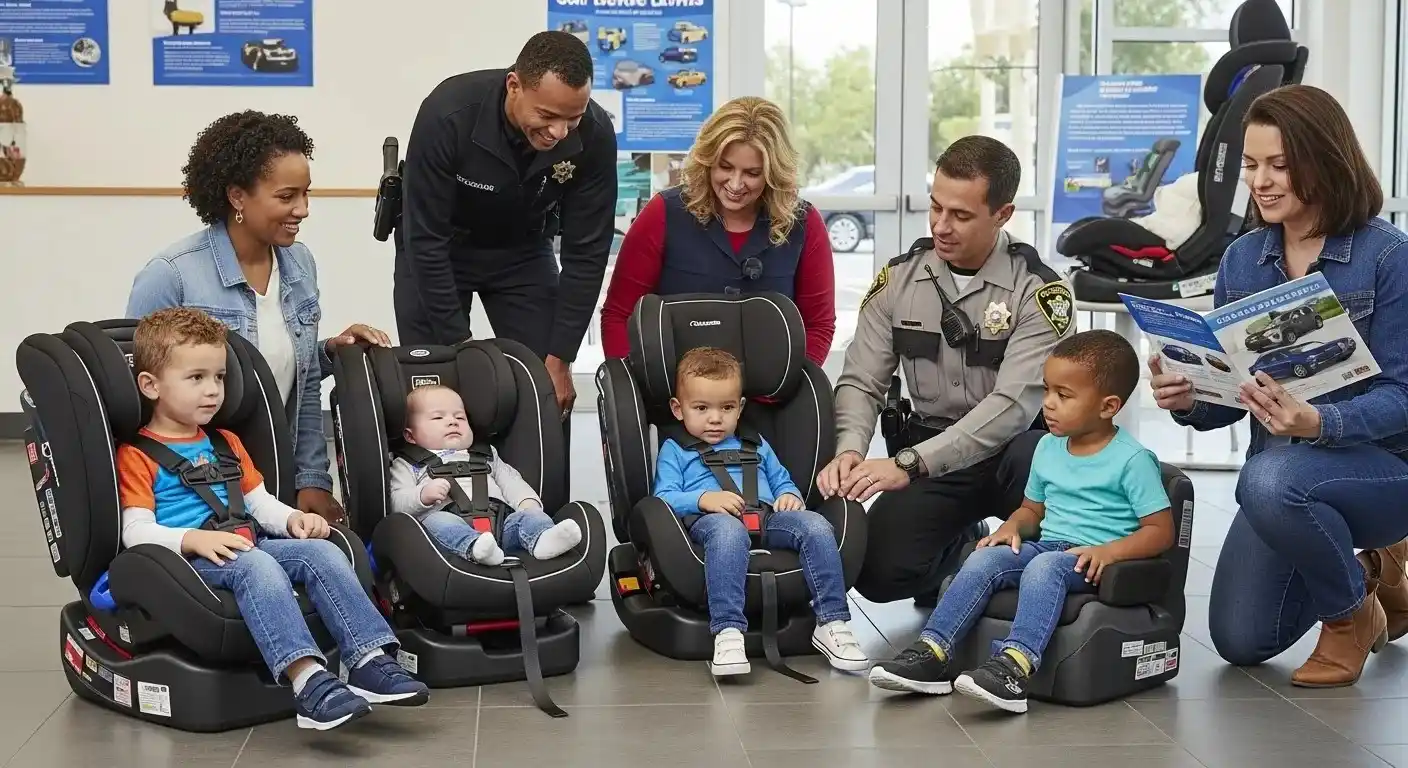
Free car seat inspection stations operate throughout Miami, Fort Lauderdale, Orlando, Tampa, and Jacksonville. Certified Child Passenger Safety Technicians staff these locations to check installations and teach proper techniques. Parents can find nearby inspection stations through the National Highway Traffic Safety Administration website or by contacting Safe Kids Florida. These inspections typically take fifteen to thirty minutes and identify common errors. Many hospitals, fire stations, and police departments host regular inspection events. Taking advantage of these free services ensures your installation meets safety standards.
Car Seat Laws in Rideshares
The same florida car seat laws apply to rideshare vehicles as personal cars throughout the state. Parents remain legally responsible for providing appropriate restraints when children ride in Uber or Lyft vehicles. Rideshare drivers do not typically carry car seats unless passengers specifically request them. This creates challenges for parents who need unexpected rides with young children. Planning ahead prevents situations where you must choose between breaking the law and missing important appointments.
Uber offers a Car Seat option in select Florida cities including Orlando and Miami. This service provides one forward-facing car seat suitable for children ages two through four. The seat accommodates children weighing twenty-two to forty-eight pounds and measuring thirty-one to fifty-two inches. Riders pay an additional fee for this service beyond standard ride costs. However, this option remains unavailable in most Florida locations. Parents should verify availability in their specific area before relying on this service.
Lyft does not currently offer built-in car seat options anywhere in Florida. Parents using Lyft must bring and install their own car seats before the ride begins. Some rideshare drivers may refuse rides if proper restraints are not immediately available. Despite legal exemptions for commercial transportation, rideshare vehicles operate as private cars under Florida law. The driver and parent can both face citations if children are not properly restrained. Always bring appropriate car seats when planning rideshare trips with young children.
Recalls Expiration and Product Defects
Car seats expire after six to ten years depending on the manufacturer and model. Expiration dates appear on labels attached to the seat frame or molded into the plastic. Materials degrade over time from temperature fluctuations, sunlight exposure, and general wear. Expired seats may fail during crashes even when they appear visually intact. Florida law requires crash-tested restraints but does not explicitly prohibit expired seats. However, using expired equipment could undermine injury claims by suggesting negligence.
The National Highway Traffic Safety Administration maintains a database of all car seat recalls. Parents should register car seats with manufacturers immediately after purchase to receive recall notifications. Checking recall status before buying used seats prevents unknowingly installing defective equipment. Major retailers and manufacturers often provide free replacement seats when recalls occur. Some recalls address minor issues while others involve catastrophic structural failures. Never ignore recall notices even when the seat appears to function normally.
Defective car seats can cause injuries even when properly installed and used. Manufacturing defects, design flaws, and inadequate safety warnings may make manufacturers liable for resulting injuries. Parents should preserve the car seat after any crash involving injuries. Product liability attorneys need the physical evidence to prove defects contributed to harm. Florida law allows families to pursue compensation from manufacturers when car seats fail to perform as intended. These cases require expert analysis showing the product did not meet reasonable safety expectations.
Impact on Personal Injury Claims
Florida follows a modified comparative negligence system when determining injury compensation after vehicle crashes. This legal framework assigns percentage fault to each party involved in the accident. Injured parties can recover damages reduced by their percentage of fault. However, Florida Statute three hundred sixteen point six one three specifically prohibits using car seat violations as comparative negligence against children under six. This protection ensures young victims still receive full compensation despite parent restraint failures.
Children ages six through seventeen face different treatment under comparative negligence principles. Insurance companies may argue that older children share fault for their injuries when not wearing seat belts. These arguments can significantly reduce settlement offers and jury awards. The defense typically claims that proper restraint would have prevented or reduced injury severity. Parents should understand how restraint compliance affects potential compensation when crashes occur with older children.
Insurance adjusters sometimes use car seat violations as negotiation leverage even when legally prohibited. They may imply that non-compliance demonstrates poor parenting or recklessness. These tactics aim to reduce settlement amounts and pressure families into accepting inadequate offers. Parents facing these situations should consult personal injury attorneys familiar with Florida restraint laws. Experienced legal counsel can counter improper arguments and protect family rights. Proper documentation of injuries and restraint status becomes critical when pursuing maximum compensation.
Protecting Your Child Through Knowledge and Action
Understanding florida car seat laws empowers you to make informed decisions protecting your most precious passengers. These regulations establish minimum safety standards but many children benefit from extended use of more protective restraints. Proper installation matters as much as selecting age-appropriate equipment for effective crash protection. Free resources exist throughout Florida helping parents verify installations and choose suitable seats. Whether you drive in Miami, Tampa, Jacksonville, Orlando, or Fort Lauderdale, the same statewide requirements apply to every trip. Legal compliance protects you from fines while proper restraint safeguards your child during unexpected collisions. Lawwalls provides this comprehensive guide because we believe informed parents make safer choices every single day on Florida roads.
If you want to learn about Louisiana touch law fine, I have written a comprehensive guide explaining penalty amounts from one hundred to five hundred dollars. The article covers lawfully stationary definitions, hands-free exceptions, primary versus secondary enforcement zones, and practical compliance strategies. Discover when enforcement begins, community service options, insurance impacts, and rideshare driver rules for Louisiana motorists.
This article provides general legal info and is not legal advice.
Frequently Asked Questions About Florida Car Seat Laws
What are Florida car seat laws by age?
Children birth through three need separate carriers or integrated seats while ages four and five require car seats or boosters and children six and older must wear seat belts during vehicle operation.
When can my child sit in the front seat in Florida?
No specific age exists in Florida law but safety experts recommend waiting until age thirteen when children become large enough for airbags to protect rather than harm them during crashes.
What is the fine for car seat violations in Florida?
The base fine is sixty dollars plus court fees and three points on your driver license though judges may allow safety course completion instead of points for first violations.
Does Florida require rear-facing car seats?
Florida law does not explicitly require rear-facing orientation but federally approved seats typically mandate rear-facing for infants and safety experts recommend it until age two or longer when possible.
Can I use just a seatbelt for my five year old?
Only if non-family drivers transport them for free medical emergencies occur or documented medical conditions prevent car seat use otherwise children five and under need proper car seat restraints.
Do car seat laws apply in Uber or Lyft?
Yes the same Florida car seat laws apply in rideshare vehicles and parents must provide appropriate restraints though Uber offers car seat options in select cities like Orlando and Miami.
What if I cannot afford a car seat in Florida?
Contact local health departments Safe Kids Florida hospital programs or United Way two one one for free or reduced-cost car seats through community assistance programs operating statewide.
How do I know my car seat is installed correctly?
Visit certified Child Passenger Safety Technicians at free inspection stations throughout Miami Tampa Orlando Jacksonville and other cities since research shows nearly half of seats are installed incorrectly.
Can grandparents get ticketed for not using car seats?
Yes any driver violating Florida car seat laws faces sixty dollar fines and three points regardless of their relationship to the child or reasons for non-compliance during the trip.
Do expired car seats break Florida law?
Florida law does not explicitly prohibit expired seats but they may fail crash testing requirements and using expired equipment could weaken injury claims by suggesting negligence or inadequate care.
What happens if my child is injured without proper restraint?
Florida law prohibits using car seat violations as comparative negligence against children under six but insurance companies may still argue it during settlement negotiations especially for older children.
Are there exceptions to Florida car seat laws?
Yes exceptions include non-family gratuitous transportation medical emergencies documented medical conditions and exempted vehicles like school buses taxis farm equipment motorcycles and large trucks over twenty-six thousand pounds.
When should I switch from booster to regular seatbelt?
When your child reaches four feet nine inches tall and the seat belt fits properly with lap belt across thighs shoulder belt across chest knees bent naturally and feet touching the floor.
Can defective car seat manufacturers be sued in Florida?
Yes under product liability law if car seats fail during proper use manufacturers may be liable for injuries and you should preserve the damaged seat as evidence for potential legal claims.
Do Florida car seat laws apply on private property?
No Florida Statute three hundred sixteen point six one three applies only to roadways streets and highways so private driveways and parking lots remain exempt from these specific restraint requirements.