

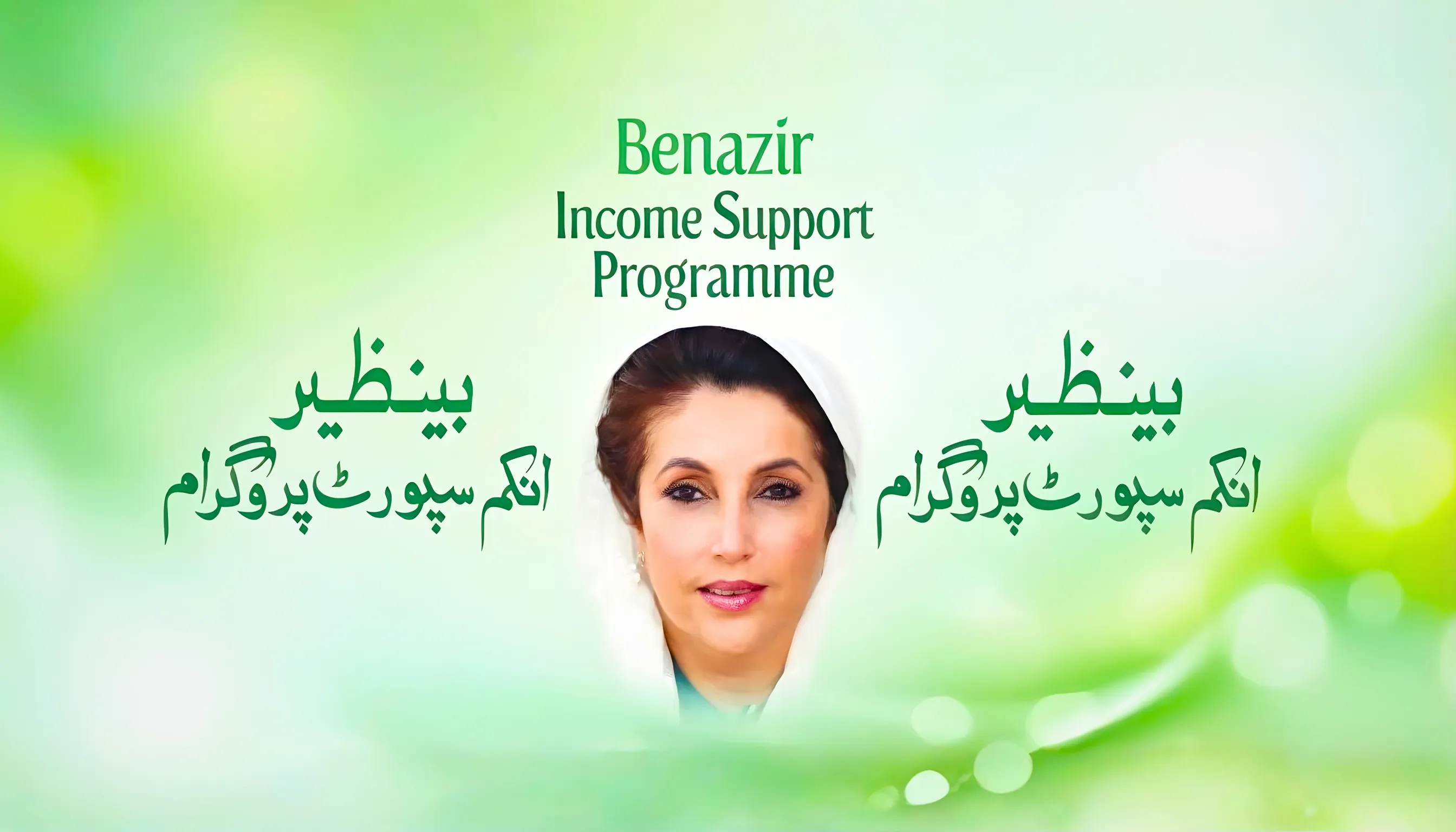
The Benazir Income Support Programme, known as BISP, is Pakistan’s largest federal social safety net, launched in July 2008 to deliver unconditional quarterly cash transfers to low income families nationwide. By 2026, the Government of Pakistan has allocated Rs. 716 billion to the programme, supporting approximately 9.6 million registered beneficiary families and reaching an estimated 58 million individuals through multiple sub programmes administered by the Ministry of Poverty Alleviation.
What Is the Benazir Income Support Programme
History and Founding of BISP
BISP was formally established on July 27, 2008, under the government of Prime Minister Yousaf Raza Gillani, following a directive by then President Asif Ali Zardari. The programme was named after former Prime Minister Benazir Bhutto, who was assassinated in December 2007. Its creation was a direct response to Pakistan’s triple financial crisis involving rising food prices, fuel costs, and global economic instability that severely affected the country’s poorest households.
In its early years, BISP provided Rs. 1,000 per month per family, reaching approximately 3.4 million households. The BISP Act of 2010 formally legislated the programme, granting it institutional permanence beyond any single government. International partners including the World Bank’s International Development Association and the UK’s Foreign Commonwealth and Development Office provided significant financial and technical support that helped scale the programme into the institutional structure seen today.
BISP Budget Scale and Reach in 2026
The Government of Pakistan allocated Rs. 716 billion to BISP in the 2025 to 2026 federal budget, representing a roughly 20 percent increase over the previous fiscal year. This allocation makes BISP one of the largest single expenditures in Pakistan’s social sector budget. The programme currently serves 9.6 million registered families, which translates to approximately 58 million direct and indirect beneficiaries, accounting for nearly one quarter of Pakistan’s total population.
According to a World Bank results report, over 93 percent of BISP beneficiaries now use technology based payment mechanisms, away from traditional cash centers. More than 2.9 billion US dollars have been disbursed since the programme’s inception. Senator Rubina Khalid currently chairs BISP and has overseen key reforms including the Digital Wallet rollout, expanded Nashonuma nutrition coverage, and increased stipends under the Taleemi Wazaif education component.
BISP Eligibility Criteria 2026
Who Qualifies for BISP Kafaalat
BISP eligibility is determined through a structured official assessment rather than self reported income claims. To qualify for the Benazir Kafaalat component, a household must earn below Rs. 25,000 per month and must score below a defined threshold on the Proxy Means Test administered during the NSER survey. Applicants must be Pakistani nationals holding a valid CNIC issued by NADRA and must be the female head of their registered household.
Additional eligibility factors include household assets, land ownership, employment status, and presence of a government employee in the family. Households that own significant agricultural land, run a registered business, or have a member in government employment typically fall outside the eligible threshold. Widows, disabled individuals, and households with no male earner receive priority consideration during assessments conducted by National Socio Economic Registry field teams.
PMT Score and the Proxy Means Test Explained
The Proxy Means Test, referred to as the PMT score, is a statistical tool used to estimate household poverty without requiring formal income documentation. BISP field surveyors collect data on housing conditions, assets, utility usage, and family demographics. These inputs generate a numerical poverty score for each household. Households scoring below the designated cut off point are classified as eligible BISP beneficiaries for cash transfer disbursements.
The PMT score can change if a household’s circumstances shift significantly. Families whose situation has worsened after the initial survey may request a reassessment through the NSER Dynamic Survey process, where updated household data is collected and a new score is generated. Valid grounds include the death of a primary earner, loss of land, or newly acquired disability, submitted through the nearest BISP Tehsil office.
How to Register for BISP
Documents Required for BISP Registration
BISP registration requires a valid Computerized National Identity Card from NADRA. Both the applicant and the spouse, if applicable, must hold CNICs linked to the same household address. An expired CNIC results in automatic disqualification from the eligibility assessment. Applicants without a valid CNIC must first complete the NADRA registration process at their nearest NADRA office before approaching a BISP Tehsil office for survey assistance.
No formal application form is submitted independently for BISP registration. The process begins when a BISP surveyor visits the household during a National Socio Economic Registry data collection drive, or when the applicant visits a BISP Tehsil office to request a Dynamic Survey. Applicants must present household details accurately including the number of family members, income sources, and owned assets for correct PMT score calculation.
NSER Dynamic Survey Registration Process
The National Socio Economic Registry is the central database BISP uses to maintain records of all assessed households in Pakistan. The NSER Dynamic Survey allows households to register or update information at any time, without waiting for scheduled mass surveys. To initiate a Dynamic Survey, the female head of household visits the nearest BISP Tehsil office, presents a valid CNIC, and requests a new household data entry.
After survey data is submitted, BISP processes the PMT score within several weeks. Applicants check results by sending their CNIC to 8171 via SMS or by visiting 8171.bisp.gov.pk. A score below the eligibility threshold triggers enrollment and a confirmation notification. A score above the threshold produces an ineligible classification, which the applicant may formally contest if incorrect data was recorded during the household assessment.
How to Check BISP Status Online via 8171
BISP 8171 SMS Service Step by Step
The 8171 service is BISP’s official helpline and eligibility verification number, operated jointly with NADRA. To check status via SMS, the applicant sends their 13 digit CNIC number to 8171 from any Pakistani mobile network. The reply confirms whether the household is registered, active, or ineligible, and shows the status of the most recent quarterly payment. This service is available on all mobile networks at standard messaging rates.
The 8171 SMS reply appears in Urdu and contains registration status, payment availability, and the nearest payment center location. If no reply arrives within 24 hours, the applicant should verify whether their SIM is registered with NADRA under their own CNIC, as unregistered SIMs may not return accurate results. The 8171 service also accepts queries from family members using the CNIC of the registered female beneficiary.
How to Use the 8171 BISP Web Portal
The 8171 web portal at 8171.bisp.gov.pk provides online eligibility and payment verification for registered BISP beneficiaries. To use it, the applicant enters their 13 digit CNIC number into the search field and submits. The system then displays current eligibility status, the latest payment disbursement details, and the active sub programme under which the household is enrolled, whether Kafaalat or another BISP component.
The official BISP web portal is the only government authorized online source for checking registration status. Multiple unofficial websites claim to provide BISP status checks but have no government affiliation. These platforms often collect personal data without authorization or display inaccurate results. Applicants should use only 8171.bisp.gov.pk for online status checks and avoid entering CNIC details on any unverified external website.
BISP Payment Amount and Schedule 2026
Benazir Kafaalat Quarterly Payment 2026
The Benazir Kafaalat component provides quarterly cash transfers to eligible households. As of 2026, the standard quarterly payment is Rs. 13,500, increased from the previous Rs. 10,500. An additional Rs. 1,000 Ramadan Bonus in March 2026 brought that quarter’s total to Rs. 14,500. Payments are disbursed four times per year in March, June, September, and December through registered bank partners and the BISP Digital Wallet.
Bank partners authorized to distribute Kafaalat payments include HBL Connect and Bank Alfalah, in addition to the growing Digital Wallet network overseen by the State Bank of Pakistan. Beneficiaries collect payments by presenting their valid CNIC and completing biometric verification at the disbursement point. Biometric systems were introduced specifically to prevent agent deductions and ensure that the full payment amount reaches each registered household without any intermediary interference.
BISP Digital Wallet and How It Works
The BISP Digital Wallet is the programme’s most significant technological reform of 2025 and 2026, designed to deliver cash payments directly to beneficiaries via mobile phone without physical bank visits or agents. The wallet is linked to the beneficiary’s CNIC and registered mobile number under State Bank of Pakistan oversight. It replaces earlier card and agent collection models associated with payment delays and unauthorized deductions.
To activate the Digital Wallet, beneficiaries must ensure their mobile number is NADRA registered under their own CNIC. BISP then issues a wallet account linked to that number, into which quarterly payments are deposited automatically. Funds can be withdrawn at any HBL Connect agent or partner retail outlet through biometric verification. Beneficiaries can also track payment history and balance directly on their mobile device without visiting any BISP office.
BISP Sub Programmes Overview
BISP administers four main sub programmes targeting different dimensions of poverty among registered households. Benazir Kafaalat provides direct cash transfers to female headed households. Benazir Taleemi Wazaif delivers education stipends for children of school age. Benazir Nashonuma addresses childhood nutrition. Benazir Hunarmand provides technical and vocational skills training. Each operates with separate eligibility criteria and disbursement mechanisms under the overall BISP framework.
Benazir Taleemi Wazaif Education Stipend
Benazir Taleemi Wazaif is the education component of BISP that provides quarterly stipends to children from registered Kafaalat households who are enrolled in government schools. The programme aims to reduce dropout rates among children from the poorest households. Stipend amounts vary by educational level and gender. Primary school students receive a lower quarterly amount, while students at higher educational levels receive progressively larger payments.
To remain eligible for Taleemi Wazaif stipends, children must maintain a minimum attendance record at their enrolled government school. Attendance is verified through provincial school education department systems. If attendance drops below the required threshold, the quarterly stipend may be withheld until compliance is restored. This conditionality distinguishes Taleemi Wazaif as a conditional cash transfer within BISP’s broader unconditional cash transfer framework.
Benazir Nashonuma Nutrition Programme
Benazir Nashonuma is BISP’s dedicated nutrition programme targeting pregnant and lactating women and children under two years of age from registered Kafaalat households. It was designed to address Pakistan’s high rates of childhood stunting and malnutrition. Enrolled families receive conditional cash transfers linked to regular attendance at designated Nashonuma centers, where growth monitoring, dietary guidance, and nutritional supplements are provided.
Nashonuma centers operate in partnership with district health authorities, staffed by trained health workers conducting monthly visits with enrolled mothers and children. The programme focuses on the first 1,000 days of a child’s life, from conception to age two, identified as the critical window for preventing permanent stunting and cognitive delays. BISP has been expanding Nashonuma center coverage since 2021, prioritizing underserved rural and peri urban districts.
Benazir Hunarmand Skill Development Programme
Benazir Hunarmand is the technical and vocational training component of BISP, designed to help beneficiary households develop income generating skills and reduce dependence on direct cash transfers over time. The programme provides free skills training in areas such as tailoring, mobile repair, cooking, and basic computing. Training is conducted through partner technical institutes across Pakistan, with priority given to women from registered BISP households.
Hunarmand participants receive a completion certificate upon finishing their training, which can be used to seek employment or register a small enterprise. BISP also provides a small financial grant to select graduates to help purchase tools or equipment needed to begin generating income from newly acquired skills. The programme represents BISP’s graduation strategy, the long term goal of helping the poorest households eventually exit the cash transfer system.
What to Do If BISP Declares You Ineligible
An ineligible result from the 8171 portal or SMS service does not necessarily mean permanent disqualification from BISP. The ineligibility classification is based on the PMT score calculated from household survey data. If the applicant believes this data was recorded inaccurately or that their household’s financial situation has significantly changed since the original survey, they have a formal right to request a reassessment through the BISP grievance and appeal process.
How to File a BISP Appeal or Reassessment Request
To file an appeal against an ineligible classification, the female head of household visits the nearest BISP Tehsil office and requests a fresh Dynamic Survey. The applicant should bring a valid CNIC and supporting evidence of hardship such as a disability certificate or a death certificate for a deceased earner. BISP staff are required to process reassessment requests within a defined timeframe under IGMS guidelines.
The Integrated Grievance Management System, known as IGMS, is BISP’s official complaint and appeal platform. Complaints can also be submitted through the toll free helpline at 0800 26477. The system tracks each complaint from submission to resolution and assigns a case number to every registered grievance. Applicants can follow up by calling the helpline with their case reference number to check the progress of a reassessment or payment dispute.
How to Update NSER Data After a Life Change
Life events that significantly change a household’s economic situation require an NSER data update to ensure accurate BISP eligibility assessment. Valid grounds include the death of an earning family member, divorce, a new disability diagnosis, or departure of an employed household member. Updates are processed at the nearest BISP Tehsil office, where a field surveyor collects revised household data and recalculates the PMT score.
NSER data should also be updated when a household’s address changes, a new family member is born, or a previously unemployed member gains formal employment that could alter the income assessment. Maintaining current NSER data ensures eligibility for BISP sub programmes and that stipends under Taleemi Wazaif and Nashonuma continue to be routed accurately to the correct beneficiary mobile payment account.
How to Avoid BISP Fraud and Fake Agents
BISP fraud is a documented and ongoing challenge. Fraudulent actors impersonate BISP agents, operate fake registration websites, and send unauthorized SMS messages claiming payment approval. Official BISP contact channels are limited to the 8171 SMS shortcode, the 8171.bisp.gov.pk portal, the 0800 26477 helpline, and authorized disbursement partners. Any contact outside these channels that claims BISP affiliation should be treated as potentially fraudulent.
Common BISP Scams and Warning Signs
Common BISP scams include fake agents charging fees for assistance, unofficial websites collecting CNIC numbers under the pretense of eligibility checks, and fraudulent calls requesting banking information to process a payment. Legitimate BISP staff never charge any fee for registration, eligibility verification, or payment assistance. No genuine BISP transaction requires a beneficiary to share banking passwords, verification codes, or financial credentials with any person.
BISP and NADRA do not send payment links via WhatsApp or social media platforms. Any WhatsApp or Facebook message claiming a BISP payment is ready and directing the user to a link is a phishing attempt and should be deleted immediately. Recipients are advised to report such messages to the BISP helpline at 0800 26477. Legitimate payment notifications arrive only through the official 8171 SMS shortcode.
BISP Helpline and Official Contact Information
The official BISP helpline operates at toll free number 0800 26477 during standard government working hours. Beneficiaries can use this number to register complaints, inquire about payment status, report fraud, or request eligibility reassessment guidance. BISP also operates Tehsil offices across every district in Pakistan, serving as in person service points for Dynamic Survey requests, CNIC updates, and formal IGMS grievance submissions.
For beneficiaries in remote areas where mobile connectivity is limited, BISP Tehsil offices provide the most reliable direct contact point. Each Tehsil office is staffed with trained BISP personnel who assist with registration queries, eligibility appeals, CNIC updates, and NSER Dynamic Survey coordination. The State Bank of Pakistan Digital Financial Services unit also maintains a separate channel for issues specifically related to Digital Wallet and biometric payment processes.
BISP Impact on Poverty and Women Empowerment
World Bank Evaluation of BISP Results
Independent evaluations by Oxford Policy Management on behalf of the UK’s Foreign Commonwealth and Development Office found a 7 percentage point poverty reduction among beneficiary households compared to similar non-recipient households. The evaluation measured poverty outcomes, educational attainment, child nutrition, and women’s economic agency. These findings have been cited by the World Bank as evidence of BISP’s measurable impact on poverty reduction in Pakistan.
The World Bank has provided over 700 million US dollars in financing for BISP through multiple International Development Association credit operations. According to World Bank results data, BISP has reached nearly 4.8 million families, with an estimated 18 million individuals receiving support at peak coverage periods. The programme is recognized as one of South Asia’s most efficiently administered social safety nets based on delivery cost per beneficiary.
BISP Women Empowerment and Social Protection Data
BISP is structured so that all Kafaalat cash transfers are paid directly to the female head of household, a deliberate design that has produced measurable outcomes in women’s financial agency. Oxford Policy Management evaluation data found that female BISP beneficiaries demonstrated increased authority over household decisions involving healthcare, education, and family expenditure compared to women in similar non-recipient households.
The emphasis on female payment recipients has also increased CNIC registration among women in low income rural areas. Because a CNIC is required to receive BISP payments, women who previously lacked formal identity documentation obtained CNICs to access the programme. This has expanded women’s access to broader government services, banking products, and legal rights that require national identity registration through NADRA.
BISP and the Ehsaas Programme Explained
A common source of confusion is the apparent relationship between BISP and the Ehsaas Programme. Ehsaas was launched in 2019 under the PTI government as a broader social protection umbrella incorporating BISP components. During that period, BISP was operationally rebranded under the Ehsaas framework, and services including the 8171 check system operated under both programme names, which is why many users encounter both names on official government platforms.
Following the return of the Pakistan Muslim League led coalition government in 2022, the BISP name was formally reinstated and separated from the Ehsaas brand. As of 2026, BISP operates independently under its original name and structure. The Ehsaas umbrella brand is no longer active, although several initiatives developed during that period continue to function under their original programme names within the BISP system.
BISP Transparency Accountability and Oversight
BISP operates under oversight of the Ministry of Poverty Alleviation and Social Safety, with independent audits conducted by the Auditor General of Pakistan. A 2023 to 2024 audit report identified financial irregularities exceeding Rs. 141 billion, including over Rs. 116 billion disbursed to beneficiaries whose family CNIC registrations had not been fully verified with NADRA at the time of the transfers.
BISP leadership has publicly acknowledged these audit findings and committed to strengthening the NSER verification process in coordination with NADRA. The Integrated Grievance Management System has been expanded to allow beneficiaries to directly report fraud or data errors. The Rural Support Programme Network has assisted BISP with community outreach and verification, particularly in rural Balochistan and interior Sindh where formal administrative infrastructure is limited.
BISP Coverage Across Pakistan Provinces and Regions
BISP operates across all four provinces, as well as Azad Jammu and Kashmir, Gilgit Baltistan, and the Islamabad Capital Territory. Punjab has the largest number of registered beneficiaries due to its higher population, followed by Sindh and Khyber Pakhtunkhwa. Balochistan has proportionally higher poverty rates relative to population size, making coverage density there a key programme priority supported by BISP’s divisional office network.
Payment timing for quarterly disbursements varies slightly by province and region, depending on banking infrastructure density, distance from payment centers, and Digital Wallet activation progress. Beneficiaries in urban centers typically receive payment confirmations earlier in the disbursement window than those in remote rural districts. Exact payment status by CNIC and region can be checked at any time using the 8171 SMS service or the official BISP web portal.
BISP Payment Amount History and Budget Growth
BISP’s quarterly payment amounts have increased substantially since the programme launched in 2008. The original monthly transfer of Rs. 1,000 was later converted to a quarterly disbursement model and raised multiple times to offset inflation and rising living costs for Pakistan’s poorest households. The Rs. 13,500 quarterly amount introduced in January 2025 represented one of the largest single adjustments in the programme’s payment history.
Critics and advocacy organizations have noted that while payment increases are welcome, the quarterly Rs. 13,500 amount falls short of adequate income replacement for a typical family of five in Pakistan’s current inflationary environment. International development researchers have recommended that future BISP payment adjustments be formally indexed to Pakistan’s official inflation rate to maintain the real purchasing power of the cash transfer over time.
How BISP Compares to Other Social Protection Programmes in South Asia
BISP is frequently compared to social protection programmes across South Asia, including India’s Mahatma Gandhi National Rural Employment Guarantee Scheme and Bangladesh’s safety net transfers. Unlike employment based programmes, BISP provides unconditional cash without requiring labor participation, recognizing that many beneficiaries are elderly, disabled, or caregivers unable to engage in formal employment. This design aligns more closely with Brazil’s Bolsa Familia model, which also targets female headed households in poverty.
A key difference between BISP and India’s MGNREGA is conditionality. MGNREGA requires beneficiaries to perform labor in exchange for wages, while BISP’s Kafaalat attaches no work requirement to the cash transfer. This ensures that the most vulnerable, including the elderly and disabled, can access support regardless of physical capacity. The World Bank has assessed BISP’s targeting accuracy as reasonably effective compared to similar programmes in low and middle income countries.
BISP Emergency Response and Disaster Relief
BISP has been deployed as an emergency cash transfer mechanism during major national disasters, most notably the 2022 Pakistan floods that displaced over 33 million people across Sindh, Balochistan, and southern Punjab. The programme’s existing beneficiary registry and Digital Wallet infrastructure allowed BISP to rapidly scale emergency disbursements to flood affected households already registered in the NSER, avoiding the delays of establishing new relief distribution networks.
The use of BISP infrastructure for disaster response demonstrated the value of maintaining an accurate national poverty registry. During the 2022 floods, the World Bank and FCDO supported supplementary financing to increase transfer values to affected households above the standard Kafaalat quarterly amount. This established BISP as Pakistan’s primary adaptive social protection platform, capable of scaling transfer values and coverage rapidly in response to national emergencies.
Those who want to learn about the Ehsaas Programme will find a comprehensive guide covering the full programme history, all subprogrammes, eligibility criteria, NSER survey process, PMT score explanation, step by step registration instructions, 8171 SMS eligibility check process, provincial variations, appeal procedures, and scam awareness has been published. The guide also includes international recognition data from the World Bank and Asian Development Bank and explains the relationship between Ehsaas and BISP.